Three pastoral perspectives from within Iran
Do Iranian Christians welcome the bombing campaign? Are they praying for an end to the regime? Do they think things will worsen for the exercise of their faith? These and other questions I was able to put to three pastors in Iran (I’d better not say how) recently.
I have no way of knowing how representative their responses are of the larger Christian population in this big country, and they are quick to apologize that their significant lack of access to wider news streams restricts their ability to discern what may be going on underneath.
Converts from Islam.
Still, they are an interesting trinity. Two are Muslim Background Believers (MBB) and run house churches for converts from Islam like themselves. One even had an eminent background in Islamic theology. He lives in a city that I dare not name, so we will call him Pastor X.
The other MBB leader lives in Isfahan, so we will call him Pastor I. Like most MBB pastors, he is not full time, but he has some members of his churches in the oil industry who expose him to an international perspective the others struggle to share.
The last one is in Tehran, and is a professional religious leader from a protected minority. We will call him Pastor T. He is well connected in the society, including at government level.
I pass on their reflections. They are always illuminating. Some are challenging. And some are inspiring.
Q. Some expected the regime to fall quickly after the initial decapitations. Do you think this was realistic?
It’s a death cult.
Pastor X. No. You don’t understand the extreme version of Shia Islam that is in charge here. It’s a death cult. These leaders welcome death. It has many committed followers at a high level and they look up into the sky and say, “let the bomb come for me—its quick and paradise is waiting” They are not scared in any way, and this may be hard for Western leaders to understand. These believers can welcome the absorption of great pain and loss of life for their cause.
There is no head to cut off.
Pastor T. Also, the government is organized. The regime is structured a bit like the house church movement, I think. It decentralized the lines of authority, and local commanders have complete freedom to achieve their military aims without political interference. There is no head to cut off.
Pastor I. The government knows it has powerful allies like China and Russia, that can counterweight the Israeli/American attacks. It’s strange to hear Western commentators say that the Strait of Hormuz is closed. It isn’t closed. Iranian tankers are allowed to go to deliver to its largest markets of China and India.
The Gulf leaders feel very betrayed by the Americans.
Another thing too is the role of the Gulf states. They were targeted but so far are refraining from joining the effort, but the Iranian leaders know the Gulf leaders feel very betrayed by the Americans, who didn’t even bother to inform them of the attacks or appeared to anticipate that Iran would target their countries in reaction.
Did you hear the call to rise up and remove the leadership?
Pastor I. Eventually it filtered through from family sources, and I was shocked that we were being encouraged to get onto the streets and protest again, just weeks after we had been massacred for the same act. Maybe the Israelis had intelligence that a government group would mount a quick coup or something, and then the people could come out and show their support.
People will not march in front of the guns of the IRGC.
That could still happen. But the idea that the people would take to the streets just because some leaders were taken out was never realistic. People will not march in front of the guns of the IRGC (Islamic Revolutionary Guard Corps) to get mowed down again by their bullets. If Mr. Trump and Mr. Netanyahu thought that was possible, they are in fantasy land.
there are a lot of people who back the government.
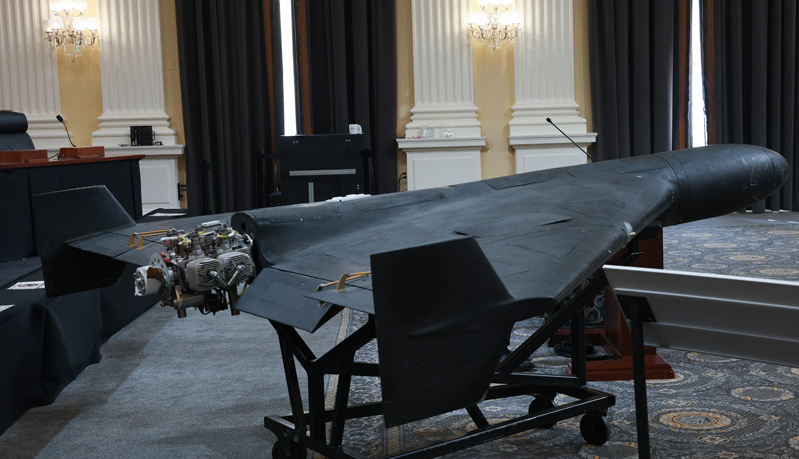
Pastor T. I think they just misread the resilience of the regime. Don’t fool yourself—there are a lot of people who back the government, certainly enough to keep control. And remember, the government can manufacture shahed drones in their millions for years.
Pastor I. Personally I do not know of anyone who wants the regime to survive, and they are surely weaker than they appear. I opened my windows on the day of the anniversary of the Islamic revolution on February 11th. The mosque loudspeakers all blared their celebrations, but it was drowned out by people in their homes opening their windows and shouting “Death to the Dictator.”
Some are saying back to you, don’t you want freedom?
It would take decades to bring real freedom.
Pastor X. Yes, but who would bring it? The Americans? Look at the mess they made in Iraq, and Afghanistan? It would take decades to bring real freedom. Decades of chaos. And remember, we don’t know what freedom is.
We were not free under the Shah—those of us whose memories go back that far. I had a family member who was disappeared by the former Shah’s secret police, the Savak. I have no desire to see the son of that miserable dictator back as a leader, and besides, he has no base of support.
We don’t want an uncritical adoption of Western modernity.
Pastor T. We have to tell our Western brothers and sisters that there is a famous Persian word they must understand. Its Gharbzadagi, and it literally means “Westoxication”. People are proud here. We don’t want an uncritical adoption of Western modernity.
What would you say was the hardest thing about the current situation?
Pastor X. That all sides seem to lie. and boast. And threaten. I am used to my own leaders lying all the time, but the American leaders (it seems to me) can’t be trusted either. I can’t tell the difference. They are both boastful, polarizing, extreme, and dripping with vilification and threats.
It drives us to God and particularly to the book of Revelation and 1st Peter.
When I started in my role, a very wise man took me aside and said, “the most important thing as a leader is to live, act, and speak so as to be trustworthy.” I see no one to trust on either side anymore. And that is a disappointment. But it drives us to God and particularly to the book of Revelation and 1st Peter.
Pastor T. I think what appalls me is that the bombing is destroying the manufacturing basis of Iran. There is not only the targeting of military bases and, God forbid, nuclear power stations. Israel in particular is seeking to destroy Iran economically as well as degrade them militarily. This will take years to rebuild.
When the bombing first started, were you cheered, thinking the regime was about to fall?
I never thought bombs alone would change anything.
Pastor T. Well, I never thought bombs alone would change anything, but yes, I did not mind in a sense that our leaders and the hated killers who ordered the January massacres took a pounding, although as a Christian I do not believe in assassination, especially of those who were talking peace.
Do most Christians want the regime to fall?
Pastor X. The vast majority of the population want the regime to fall, not just us Christians. I would rather have a mess for a decade than a day of further oppression, even though it will be so hard to rebuild, and the older people will bear the brunt. They won’t get the medicines or the care they need.
It will take years for the buildings to be restored. Months even just for the toilet to flush properly. But to be honest, it’s that way now. So, for ordinary people, there is nothing to lose.
The big fear we have is that even if the current regime is removed, there will then be a very destabilizing insurgency problem. The country is awash with arms, and the regime supporters are many and know how to fight. It would be like Iraq after 2003.
Have attitudes changed among your congregations four weeks into the bombing?
This no longer an attack on a hated Islamic regime, but an attack on Iran’s cultural heritage.
Pastor I. Here in Isfahan yes, they have a bit, because we have seen some of our beautiful buildings destroyed. This is a lovely city. The glory of Persia. People are saying, how could the Israelis and the Americans be so foolish? We feel that this no longer an attack on a hated Islamic regime, but an attack on Iran’s cultural heritage.
Pastor T. Not where I am, and it has a lot to do with how many families lost loved ones in January. Those massacres will never be forgiven or forgotten.
Can you still gather and how do you preach through this time?
Pastor X. We are meeting more, though in smaller groups, because we know that some are struggling to find enough food, since transport is so disrupted. So, our various groups gather three times a week for a meal and a service.
We make sure no one goes away hungry.
In the house church, all our gatherings are around a meal anyway, like in the early church. And we make sure no one goes away hungry. We also have a couple of doctors in our groups, so they do some medical treatment as well, as some have been hit by falling masonry and so forth.
Pastor I. I read a Psalm to the group and we discuss it and pray it. Then I take a short passage from Revelation, and I stress that even though evil may seem to be triumphing, God is still on the throne.
Pastor T. God is still on the throne, and Christ has the gift of eternal life. We can face death as cheerfully as the leaders of the Shia regime.
Pastor X. Sometimes we just do “Bible whispers”. I whisper a verse to one person in the group, and they whisper it to the next until all have heard it. Then we recover the verse, since it has changed its form in all the retelling, which can be very funny. Then we chant it all together. Someone might even put it into a song.
Christ is the priest that has an “indestructible life”.
Last weekend we just chanted for a half hour the phrase, “Christ Jesus is our High Priest for ever, and he ever lives to intercede for us”, which was based on Hebrews 7:25. I also shared that Christ is the priest that has an “indestructible life”, (Heb 7:16), and that resonates so well when the bombs are falling. We have a Savior who is indestructible, and he offers this life to us too.
If the regime survives, will it be worse for believers?
Pastor X. I fear so. They will feel that God has vindicated them, and they will react by cracking down more on the house churches.
Pastor T. The leaders will feel they must “take the North Korea route.” By this they say that the only reason North Korea is not attacked by the USA is because it has a nuclear weapon. So, they think they must acquire one to deter further attacks, and Israel will not allow Iran to have it, so the stage is set for further conflict.
What do you want people to learn from all this?
Wars never work.
Pastor T. That wars never work, and even when it appears they do on occasion, it still causes so much dislocation for so long.
Pastor I. I can’t even begin to answer that question. I and my people are just trying to survive, and we are banking everything on Christ’s promise to give us an eternal life when we die. He’s got credibility. He is the first person in the universe to have a body that will last for ever!
Do you pray for the removal of the regime?
Islamic authoritarianism is a fuel for the fire of revival.
Pastor T. Well, I don’t, because I have seen how Islamic authoritarianism is a fuel for the fire of revival. Who am I to advise God on what the best outcome will be?
What matters in life is to be a faithful witness and see his kingdom grow, and we know that it grows best in suffering. That is our story. A vast MBB church has grown here since 1979.
Pastor I. I do, but I pray the exact same prayer for our leaders as well as for the Israeli and American leaders, because, and please forgive me, I am sorry to say I do not see a difference.
A prayer on behalf of God’s people in Iran
Lord, we look at the leaders of the world, and they seem reckless at best, evil at worst. Lord keep the war short, the suffering temporary, and give us, the people on the ground, the chance to bring peace and stability; we will build rather than boast, we will heal rather than bully, we will love rather than hate. Lord turn back the forces of chaos, and those who rejoice in it.
Originally published by on the Five4Faith Substack. Republished with permission.
Dr Ronald MacMillan has forty years as a journalist, scholar and activist in helping the persecuted. He co-founded the world’s first news agency to focus on religious conflict, News Network International, and authored the definitive book on persecution in 2006, entitled Faith That Endures: The Essential Guide to the Persecuted Church. He is currently President of a Speech Tuition Company enabling leaders to change the world for the better through their words, and Chairman & Global Analyst of the world’s first Think Tank focusing on religious freedom, The International Institute for Religious Freedom. He is based in the UK.
The International Institute for Religious Freedom (IIRF) was founded in 2005 with the mission to promote religious freedom for all faiths from an academic perspective. The IIRF aspires to be an authoritative voice on religious freedom. They provide reliable and unbiased data on religious freedom—beyond anecdotal evidence—to strengthen academic research on the topic and to inform public policy at all levels. The IIRF’s research results are disseminated through the International Journal for Religious Freedom and other publications. A particular emphasis of the IIRF is to encourage the study of religious freedom in tertiary institutions through its inclusion in educational curricula and by supporting postgraduate students with research projects.